Classical Academic Building: A Dignified Design Review
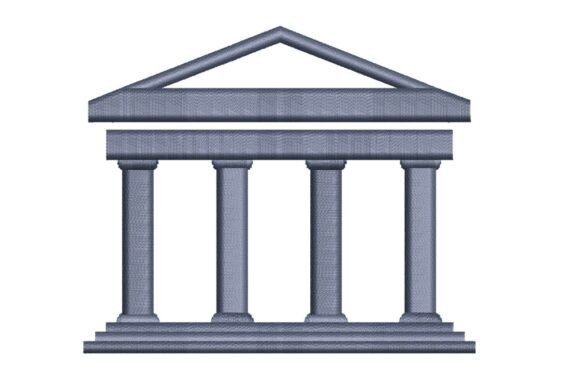
When you first open the Classical Academic Building embroidery file, you get a very clear sense of what it represents. The stately Greek-style temple iconography immediately conveys tradition, achievement, and a timeless sense of knowledge. It’s a dignified icon, not a playful one. This isn’t a design for a casual, whimsical project. It has weight and purpose.
The Mood It Creates: Where This Design Naturally Belongs
The mood is classic and commemorative. The shape is balanced and symmetrical, which gives it a formal, reliable feel on a finished product. This design isn’t shouting for attention; it’s quietly asserting significance. That visual personality means it naturally belongs to projects that celebrate milestones. I immediately thought of graduation gifts, alumni merchandise, or a personalized gift for a retiring professor. It would be perfect embroidered on the corner of a high-quality linen pillow cover for a graduate’s new apartment, or as a subtle emblem on a custom tote bag for a university visitor.
For small business owners and Etsy sellers, this design taps into a very specific emotional connection. A parent looking for a gift to honor their child’s hard work will recognize and appreciate this symbol instantly. It adds perceived value because it feels intentional and meaningful, not generic.
Real-Life Embroidery Performance: A Practical Walkthrough
Let’s talk about how this design would perform in real stitching situations. I’m thinking through a scenario where I’m preparing a custom embroidered sweatshirt for a client who is a university donor. I want the final product to look clean, professional, and lasting.
On apparel like sweatshirts or t-shirts, the Classical Academic Building will act as a central, focal point. It’s likely a medium-sized design, so it won’t overwhelm the garment but will be clearly visible. On a dark fabric, like a navy sweatshirt, you’d need to be mindful of thread color contrast. Using a bright white or a metallic silver for the temple details would make it pop and maintain that dignified clarity. On a light fabric, like a cream-colored tote bag, it would have a more subtle, engraved look.
Where It Will Shine
This design excels on stable, flat surfaces where its symmetry can be perfectly realized. Think pillow covers, tea towels, aprons for a school event, or patches. As an embroidered patch, it could be incredibly versatile—applied to a backpack, a blanket, or framed as nursery decor for a family steeped in academia. For holiday gifts, like a Christmas ornament for a teacher, it would be uniquely personal. The design also has strong potential for boutique branding if your shop caters to the collegiate or scholarly niche.
Where To Use With Care
You need to be careful with smaller hoop sizes. If the design has intricate details in the temple columns or roof lines, shrinking it down too much might cause those details to blur or become too dense. Stitch density is a key consideration here. On textured fabrics like some blankets, or on stretchy fabrics like some t-shirts, you’ll need a good stabilizer to keep those clean lines crisp. Also, on curved surfaces like caps, the central apex of the temple roof might distort if not hooped carefully.
Tiny lettering, if the design includes any, can be tricky. Always test on scrap fabric first. For products that need frequent washing, like baby clothes (if used for a “future scholar” themed item) or kitchen towels, ensure you’re using quality thread and a secure stitch so the design holds its integrity.
Affecting Appeal, Value, and Trust
From a commercial perspective, using the Classical Academic Building affects your product in several ways. Its visual appeal is sophisticated, which elevates your handmade presentation. It shows you’ve chosen a design with purpose, which builds customer trust. For a creative entrepreneur selling digital embroidery files, including a printable mockup of this design on a graduation stole or a book cover can instantly communicate its use case and help buyer engagement.
It aids brand consistency if your craft business revolves around educational or commemorative products. The design’s recognition factor is high—people know what a classical building represents. This instantly boosts the giftability of any item you apply it to. The professionalism of the final embroidered product hinges entirely on your execution; the design itself provides a strong, professional foundation.
Practical Designer Notes Before You Stitch
Before you run this embroidery file on your machine for a client project or your own small shop merchandise, here are my practical notes.
- Absolutely test the design on a scrap of your intended fabric first. Check the stitch density, especially in any potential fill stitch areas.
- Review thread color contrast. Try it in a black and white mockup digitally to see how the shapes hold up without color.
- Confirm the hoop size you intend to use. If the design is complex, a larger hoop might be necessary for clarity.
- Inspect the small details on your screen. Look at the corners of the building, the lines of the columns. Are they defined by satin stitches or running stitches? This will affect your stabilizer choice.
- Compare how it looks on both light and dark fabric backgrounds in your software. Sometimes a design can feel different on each.
- Use proper stabilizer. For a design with this much potential detail, don’t skimp here.
- Finally, and critically, confirm the licensing before selling finished items or commercial embroidery projects. Know if you can use this machine embroidery design for personal and commercial projects, or if there are restrictions. Never assume.
The Classical Academic Building is a design asset with a clear and powerful narrative. It’s not for every project, but for the right project—the one that needs to speak of history, achievement, and lasting knowledge—it is an excellent and reliable choice. Your embroidery will carry that weight beautifully, resulting in a finished product that feels considered and significant.