Reviewing the School Books Apple Pencil Teacher Learni Embroidery Design
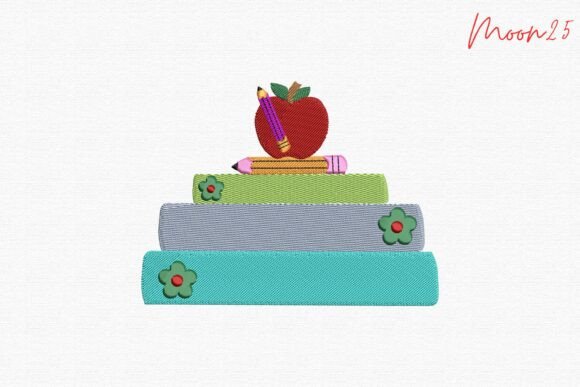
As an embroidery designer preparing for a weekend craft fair, every design in my catalog gets a practical review. I look at it not just as art, but as a potential product that needs to sell on a crowded table. Today, I’m evaluating the School Books Apple Pencil Teacher Learni embroidery artwork. The description tells me it’s a charming design celebrating education, featuring a colorful stack of books topped with a classic apple and pencil. Let’s break down where this design shines and where careful production planning is needed for craft fair success.
First Impression: Charming, Classic, and Instantly Recognizable
This design hits a sweet spot. It feels charming, classic, and warmly nostalgic. It’s not overly bold or minimalist; it’s decorative and soft. The theme of education and learning is universal, and the imagery of books, an apple, and a pencil is immediately understood at a glance. This is crucial for a bustling craft fair where customers make quick visual connections. The “colorful stack of books” suggests a playful, approachable feel, not a stern or overly rustic one. It has a premium, giftable quality because it speaks to a cherished profession and a fundamental human value—learning.
Where This Design Stands Out on the Craft Fair Table
Imagine my booth: rows of embroidered tote bags, aprons, tea towels, caps, and pillow covers. The School Books Apple Pencil Teacher Learni design won’t be the loudest, but it will be the one that draws a specific, affectionate audience. Teachers, parents, students, and school administrators will gravitate toward it. It has strong niche appeal. For visual impact on a table display, I would place it on products that allow the design to be a clear focal point.
Here’s my evaluation of its performance on key craft fair products:
- Tote Bags & Market Bags: Excellent. A medium to large rendition on a natural canvas or linen tote looks both handmade and useful. The educational theme makes it a great “teacher bag” or “library bag,” adding a story to the product.
- Aprons: Strong candidate, especially for a kitchen or craft apron. It leans more toward a decorative, gift apron rather than a heavy-duty one. Positioning it on the bib or pocket would work well.
- Tea Towels & Kitchen Towels: Good, but caution on fabric texture. Embroidering on a standard tea towel can be lovely, but the design’s details must be clear. Textured towels might lose some clarity in the book stack details.
- Caps: Tricky but possible. The curved surface of a cap demands a resilient design. Small lettering or tiny details can get lost. A simplified, slightly larger version of just the apple and pencil atop the books might be better for cap embroidery.
- Embroidered Patches: Fantastic. This design is perfect for a patch. It tells a complete story, is colorful, and can be applied to backpacks, laptop bags, or journals. Patches are low-cost, high-appeal items at fairs.
- Fabric Pouches & Small Gift Items: Ideal. A small pouch with this design feels intentional and gift-ready. It’s a perfect “small ticket” item that can lead to larger purchases.
- Pillow Covers: Very good. On a pillow, it becomes a decorative home accent, appealing in a study, classroom, or a graduate’s dorm. It feels cozy and sentimental.
Practical Production Notes for the Busy Maker
Turning a digital embroidery file into a stack of sellable products requires a production-minded eye. For School Books Apple Pencil Teacher Learni, here are my key considerations.
Understanding Scale and Clarity
This design has layered elements: a stack of books, an apple, and a pencil. In a small size (under 3 inches), the individual book details and any small lettering on the books might become dense and lose definition. It works best as a medium to large focal design, perhaps 4 to 6 inches in width. For small accents, consider using just the apple and pencil element if the file allows separation. Always test the design on scrap fabric at the intended hoop size before batch production.
Stitch Density and Fabric Choices
A “colorful stack of books” implies multiple thread color changes and potentially dense stitch areas to create solid, vibrant covers. This is beautiful but requires attention to stabilizer choice, especially on lighter fabrics like towels or pouches to prevent puckering. On dark fabrics, ensure the thread colors have enough contrast to pop; the classic red apple, for instance, must be vivid. For textured fabrics, a slightly higher stitch density might help the design hold its visual weight.
Photography and Online Listing Appeal
For Etsy sellers and digital shop owners, this design photographs well. Its classic, clean composition looks professional in printable mockups and on real product photos. The educational theme makes it easy to write compelling listing descriptions targeting teachers and learners. Showing it on a variety of products (a tote, a patch, a towel) in your listings can demonstrate its versatility.
Batch Production and Commercial Use
The design feels repeatable. It’s not overly complex that it would become tedious to produce in batches for a fair. Consistency in thread colors and placement will create a cohesive product line. A crucial note: before selling any finished product, confirm the commercial licensing terms of the embroidery file. The product description provided does not specify license details; this is an absolute must-check for any digital embroidery file intended for commercial embroidery products.
The Final Verdict for Craft Fair Success
The School Books Apple Pencil Teacher Learni design is a solid addition to a craft fair lineup, particularly for makers whose brand touches on education, nostalgia, or gift-quality handmade items. Its strength is its clear emotional resonance. It won’t shout, but it will warmly engage a specific buyer, increasing perceived product value. In a booth display, grouping all products featuring this design together creates a mini-collection that tells a stronger story and boosts brand consistency.
My final advice: create at least one real physical mockup. Embroider it on your chosen base product—a tote bag or tea towel. See how it feels in your hands, how the colors interact with your fabric, and how it attracts attention on your sample table. This real-world test, checking thread contrast, spacing, and stitch density, is the single best step from digital file to sellable craft fair product. This charming design has the potential to be a quiet bestseller, celebrating learning in a tangible, handmade way.