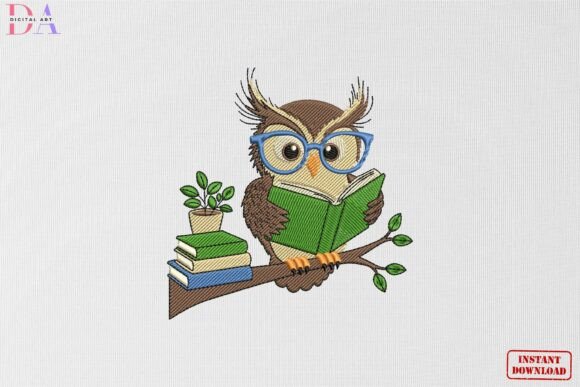
Why This Reading Owl Embroidery Charm Belongs in Your Project Queue
Every time I evaluate a new embroidery design for real-world use, my first question is simple: does it tell a story? The Reading Owl Library Charm does that immediately. It’s not just a cute owl; it’s a scene. An owl with stylish glasses, perched on a branch, engrossed in a book. That narrative—of quiet learning, of cozy curiosity—is its greatest strength. Before you even thread your machine, you can envision the mood it will create: intellectual yet whimsical, educational but warm. It’s a design that feels complete, like a little illustrated charm ready to be stitched into a tangible story.
The Perfect Fit: Where This Owl Finds Its Home
In practical terms, this design’s theme and layout make it a versatile candidate. I immediately pictured it on a canvas tote bag for a librarian friend, or as a central motif on a child’s sweatshirt for back-to-school. Its School category is a clear guide, but its appeal is broader. Think baby blankets or nursery decor wall hangings that celebrate a love of stories. It would make a thoughtful, personalized gift embroidered onto a tea towel for a teacher, or a charming patch sewn onto a denim jacket for a book club enthusiast.
For small business owners and Etsy sellers, this charm translates well into products with strong giftability. An embroidered pillow cover for a cozy reading nook, or an apron for someone who loves kitchen-side literature. When you’re building a craft business, designs that evoke a specific, positive emotion like this one help with brand consistency and customer recognition. A customer looking for a “book lover gift” will immediately connect with this finished product.
A Closer Look at Stitching and Application
Moving from vision to the hoop, here’s where a designer’s eye matters. The owl, glasses, book, and branch suggest a mix of elements: likely some fill stitch areas for the body and book, and finer details like the glasses and branch lines. This is where your preparation is key. Always test the design on scrap fabric first, preferably a similar material to your final project. Check the stitch density on those combined elements; a very dense design on a lightweight t-shirt might need careful stabilizer choice to prevent puckering.
For custom apparel like sweatshirts or caps, the design’s composed layout should work well, but be mindful of curved surfaces. The charm’s details should maintain clarity. On dark fabric, thread color contrast is paramount—you’ll want to ensure the lighter elements (the book, the owl’s features) pop. This is a design where reviewing stitch density and inspecting small details before committing to a client project saves time and ensures quality.
Spots for Caution: Making It Work Every Time
No design is universally perfect, and practical success means knowing its limits. The Reading Owl Library Charm has details—the glasses, the book text lines, the branch—that could become less distinct on very textured fabrics or if scaled down aggressively for a very small hoop size. If you’re planning a tiny version for a baby’s cap or a delicate handkerchief, run a test. Similarly, on stretchy fabric, ensure your stabilizer strategy is robust to keep those shapes crisp.
For products destined for frequent washing, like kitchen towels or children’s apparel, a well-digitized design with secure stitches is crucial. While I can’t speak to the exact stitch count of this file, the principle is universal: a clean, well-defined design like this should hold up beautifully if the underlying embroidery file is quality. This reliability directly impacts customer trust and the professionalism of your handmade product.
Designer Notes for a Smooth Stitch-Out
My routine before any project, especially for commercial embroidery or client work, involves a few key steps. For this owl:
- Test it on both light and dark background scraps to finalize thread palettes.
- Create simple black and white mockups to see how it reads without color, focusing on shape integrity.
- Consider its use in digital product previews or printable mockups if you’re a digital product seller—its clear theme makes it a strong visual asset.
- Always, always confirm licensing before selling finished items. Know if the machine embroidery design is for personal use, commercial use, or both.
- Finally, compare hoop size recommendations (if provided) with your intended item. A design meant for a 4x4 hoop might be perfect for a cap, but scaling it for a large tote bag requires checking that the details don’t become sparse.
The Final Impression: Value in Every Stitch
When I step back and think about the Reading Owl Library Charm as a whole, its value is clear. It offers more than just stitches; it offers a concept. For creative entrepreneurs and makers, that conceptual strength boosts buyer engagement. A customer isn’t just buying an embroidered pillow; they’re buying a “reading owl pillow” with a specific charm and story. That enhances the perceived value of your work.
For apparel decorators and boutique owners, it’s a design that fits into a niche—literary, educational, cozy—without being overly generic. Its visual personality is friendly and intelligent, making it suitable for a wide age range, from children’s items to gifts for adults. In a crowded market, designs with a distinct, well-executed theme like this help your products stand out.
My ultimate judgment? This is a design worth queuing up. It’s charming, it’s narrative, and it’s adaptable. With sensible testing and application—mindful of fabric choices and detail preservation—it will stitch out into a delightful, professional-looking finished product. Whether for a personalized gift, a craft fair product, or your own small shop merchandise, this little owl with its book and glasses promises to bring a story to life, one stitch at a time.